posted by Team XYZ on September 16, 2026
BrianParker.xyz – GoDaddy customer – (United Kingdom)
TL;DR:
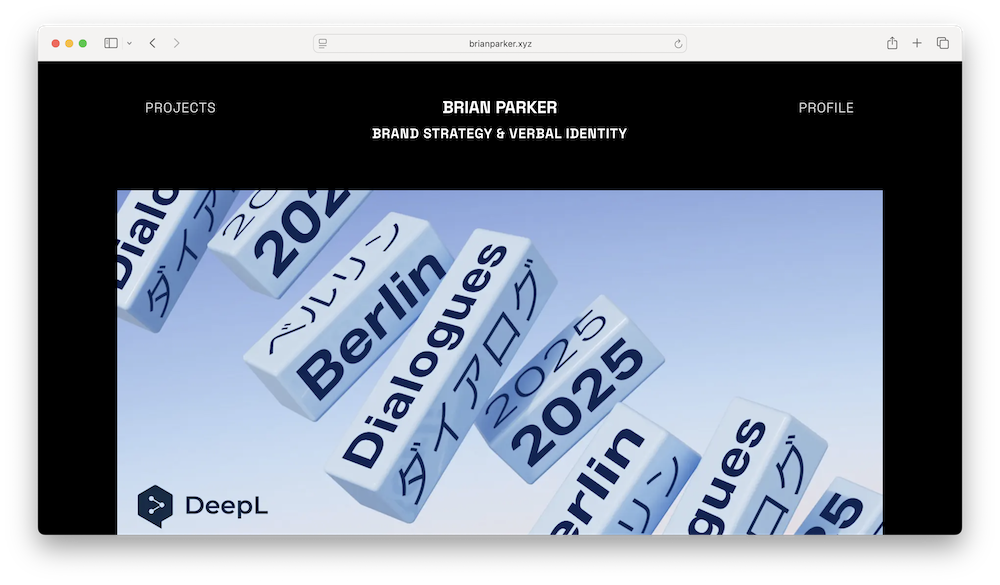
- BrianParker.xyz is the personal website of Brian Parker, a brand and verbal strategist working across the creative industries.
- Brian uses his website to showcase his partnerships with design agencies, creative studios, artists, and entrepreneurs on brand strategy and language.
BrianParker.xyz Overview
- Who: Brian Parker is a brand and verbal strategist providing naming, brand strategy, tone of voice, and campaign copy services for design agencies, creative studios, independent brands, and entrepreneurs.
- What: Brian uses his website to showcase selected client projects and explain his approach to naming, brand strategy, and verbal identity.
- When: Brian has worked independently as a brand and verbal strategist since February 2016, following more than three years at design studio Pentagram, according to the Experience section of his LinkedIn profile.
- Where: Brian is based in the United Kingdom.
- How: His work spans projects across technology, audio, hospitality, and cultural institutions, with case studies on BrianParker.xyz featuring DeepL, PMC, Hynt, the Musical Museum, and Octagon Studios.
Brian’s case studies
Brian highlights a set of representative case studies on his Profile page, with a more extensive list available on his Projects page. Here are some of our favorites:
- DeepL Dialogues: Named “Dialogues,” the title of AI and machine translation platform DeepL’s first customer conference in Berlin, with Pentagram London’s strategy team.
- PMC Speakers: Shaped tone of voice and social copy for speaker brand PMC’s new identity, including a Google Form-based initiative spotlighting producers and engineers who use its gear.
- Hynt: Renamed scent technology company Hynt (formerly OW Digital), a project built around the wordplay on “hint,” with Pentagram’s London strategy team.
- The Musical Museum: A campaign video on the museum’s Optigan organ drew over 1.2M views, per the case study.
- Octagon Studios: Formalized “the octagon,” a long-standing nickname for the Brixton studio’s live room, into its new name.
- Additional clients: Sourdough Disco, Afriqua, Charcoal Papers by Antonio Ysursa and Taylor Franklin Quinn
Brian’s career and creative background
Brian’s background spans brand strategy, communications, music, and cultural research, with experience across independent consulting, design studios, and academic work. Here are some highlights from his career and creative background:
- Freelance brand and verbal strategist: Brian has worked independently since 2016, providing naming, brand strategy, and verbal identity services and collaborating with teams including Pentagram London and Polonsky & Friends.
- Pentagram: As a Communications Assistant in New York, Brian wrote and edited portfolio and blog copy, developed case studies and presentations, and coordinated media assets across several of the firm’s offices.
- NYU Tisch School of the Arts: Brian earned a BFA in Recorded Music from the Clive Davis Institute.
- Fulbright-mtvU Fellowship: Brian conducted research on electronic music culture in Latin America, including multilingual artist interviews and curated music projects.
Connect with BrianParker.xyz
The value of a FirstNameLastName.xyz domain like BrianParker.xyz
- The generic .xyz domain suits a strategist like Brian, whose portfolio on BrianParker.xyz spans naming, brand strategy, and campaign copy across design agencies, creative studios, technology, audio, hospitality, and cultural institutions.
- The availability of .xyz domains makes it easier to secure an exact match for a personal or professional name, and using a FirstNameLastName.xyz domain like BrianParker.xyz gives Brian an online presence directly tied to his professional name and body of work
- This naming approach can help clients, collaborators, and studios searching for him identify his professional website, while giving Brian a domain name he can easily share by word of mouth without relying on search or social algorithms. Our search for “Brian Parker branding” found BrianParker.xyz on the first page of Google results as of August 19, 2026
More creatives from the #GenXYZ community
- Arkansas graphic artist Shelby Osbourn uses SheCreative.xyz to share her portfolio across branding, print, and type design
- Berlin-based photographer, director, and producer Tim Tyson uses TimTyson.xyz to showcase campaign work, artist portraits, and more
- Art director Marko Medic uses MarkoMedic.xyz to showcase work for brands such as Glossier and La Croix.
posted by Team XYZ on September 15, 2026
August 2026 Highlights
- Most popular TLDs in premium sales*: .Security, .xyz, and .CEO
- Most popular TLDs in standard sales: .xyz, .LOL, and .Lat
- Highest .xyz premium sale(s):
- Ink.xyz – $3,000/year MSRP
- Highest aftermarket sale(s) reported:
- 3-letter domains accounted for 17.02% of the .xyz aftermarket sales reported at NameBio, for example:
- Aftermarket sale Leo.xyz for $12,000
- Aftermarket sale SDR.xyz for $300
- Aftermarket sale DMP.xyz for $227
Aftermarket sale data is sourced from NameBio. If NameBio did not pick up your sale, you can report it at https://namebio.com/report.
- Various individuals, businesses, and platforms launched websites on premium XYZ Registry domains
- Koo.xyz ($350/year MSRP) registered by an event contract trading platform
- Pog.xyz ($350/year MSRP) registered by an interactive crypto trading platform
- Shuffle.Security ($3,000/year MSRP) registered by a cybersecurity platform
- 0.Security ($3,000/year MSRP) registered by an AI cybersecurity research lab
- Cars.LOL ($1,000/year MSRP) registered by a social media platform
- Atlantic.Rent ($1,300/year MSRP) registered by an automobile rental platform
- The top 10 most popular SLD keywords for .xyz registrations in August were: ai, me, one, bet, com, app, hub, win, tech, lab
- XYZ community highlights
- Jack Dorsey’s financial services company Block.xyz made Berd.xyz publicly available as an open-source desktop application for working with AI agents across projects, skills, tools, and models, after initially developing it for Block’s internal teams.1
- TATA Motors, India’s largest commercial vehicle manufacturer2, introduced TATA.Cars as its new global consumer-facing identity.3
- Independent developer Jonathan Wilke built public bidding leaderboard Outbid.LOL in three hours, and the project went viral, drawing more than 1 million visitors and $120,000 in revenue within 48 hours of launching.4
- Freshly funded companies using XYZ Domains
Words from #GenerationXYZ:
Caldera.xyz
“We chose to build on .xyz because it is by far the best way for us to signal our Web3-nativeness. We’re a developer-focused company, so we need to communicate that clearly. Using a .xyz domain is our way of speaking to Web3 devs: we’re like you, we get you, and we understand the problems you’re facing.”
– Matt Katz, CEO, Caldera.xyz
Discover a curated selection of available .xyz domains with our .xyz premiums, .xyz numbers, and CNOX search tools.
* Premium XYZ Registry domains refer to premium domains for extensions with standard and premium domains, and XYZ’s premium namespaces such as .Cars, .Car, .Auto, .Theatre, .Storage, .Security, and .Protection.
** “BIN” (or High/Low) priced premium domain. Domains in this tier have a premium price for the first year, but renew at standard pricing. All other premium domains have annual premium renewal fees.
XYZ Registry Domains Report – August 2026
Top 20 Premium XYZ Domains Registered (not ranked)
| H.Auto |
Pax.Protection |
| EX.Cars |
Project.Quest** |
| 2.CEO |
Atlantic.Rent |
| AA.CEO |
0.Security |
| XO.Christmas |
VY.Security |
| Cat.College |
100.Skin |
| 92.Game |
ELV.Storage |
| Miami.Hair |
CommonsZero.Theatre |
| TV.LOL |
QU.xyz |
| Tech.Mom |
5D.xyz |
More Standout Premium Registrations
| OZ.Auto |
OX.LOL |
| Sentinel.Auto |
Pizza.LOL |
| Bit.Cars |
Guardian.Security |
| Revs.Cars |
Arch.Security |
| PG.CEO |
Moon.Security |
| Boardroom.CEO |
Club.Skin |
| Beyond.College |
DeepVault.Storage |
| Springfield.College |
Blob.Storage |
| JH.Game |
C4.xyz |
| Dragon.Game |
Golf.xyz |
August .xyz Aftermarket Overview
(source: Namebio.com)
| Total dollar value: $100,444.00 |
| Average price: $2,137.11 |
| Low price: $100.00 |
| High price: $24,888.00 |
| Maximum SLD characters: 23 |
2L – 2 (4.26%)
3L – 8 (17.02%)
4L – 3 (6.38%) |
Top 10 XYZ Domains
(Ranked by volume)
- .xyz
- .LOL
- .Lat
- .Homes
- .Autos
- ↑ .Pics
- ↓ .Mom
- .Quest
- ↑ .Monster
- ↓ .Beauty
Top 10 .xyz Premium Domains Registered
(Price listed is MSRP)
- Ink.xyz – $3,000
- Golf.xyz – $3,000
- Engineer.xyz – $1,300
- Monster.xyz – $1,300
- QU.xyz – $1,300
- Theatre.xyz – $700
- Jun.xyz – $350
- ITA.xyz – $350
- XML.xyz – $350
- DIA.xyz – $350
Top 10 .xyz Aftermarket Sales
(source: Namebio.com)
- Pools.xyz – $24,888
- Highline.xyz – $20,000
- Outcomes.xyz – $15,500
- Leo.xyz – $12,000
- Vaults.xyz – $10,000
- FastPay.xyz – $3,299
- SQFT.xyz – $2,000
- JavLion.xyz – $1,22
- MXDM.xyz – $1,009
- Market.xyz – $597
Top 20 Trending .xyz SLD Keywords
(source: Internal Data)
- ai
- ↑ me
- ↑ one
- ↓ bet
- ↑ com
- ↓ app
- ↓ hub
- ↓ win
- ↓ tech
- ↑ lab
- ↓ play
- ↑ casino
- ↓ game
- ↑ vip
- ↓ top
- ↑ web
- ↑ link
- ↑ studio
- ↓ test
- ↓ shop
1. https://block.xyz/inside/designing-ai-with-character-what-we-learned-building-berd
2. https://www.fortuneindia.com/companies/tata-motors-ltd
3. https://www.automotiveworld.com/news/tata-motors-brands-passenger-vehicle-range-tata-cars/
4. https://finance.yahoo.com/small-business/articles/120-000-one-million-visitors-154500442.html
5. https://www.securityweek.com/oligo-raises-60-million-for-runtime-security/
6. https://app.dealroom.co/news/note/arrakis-security-raises-8m-seed-to-secure-enterprise-ai-agents
7. https://www.finsmes.com/2026/08/twyne-raises-2-5m-in-seed-funding.html
posted by Team XYZ on September 14, 2026
PLNeuro.xyz – CSC customer – (United States)
TL;DR:
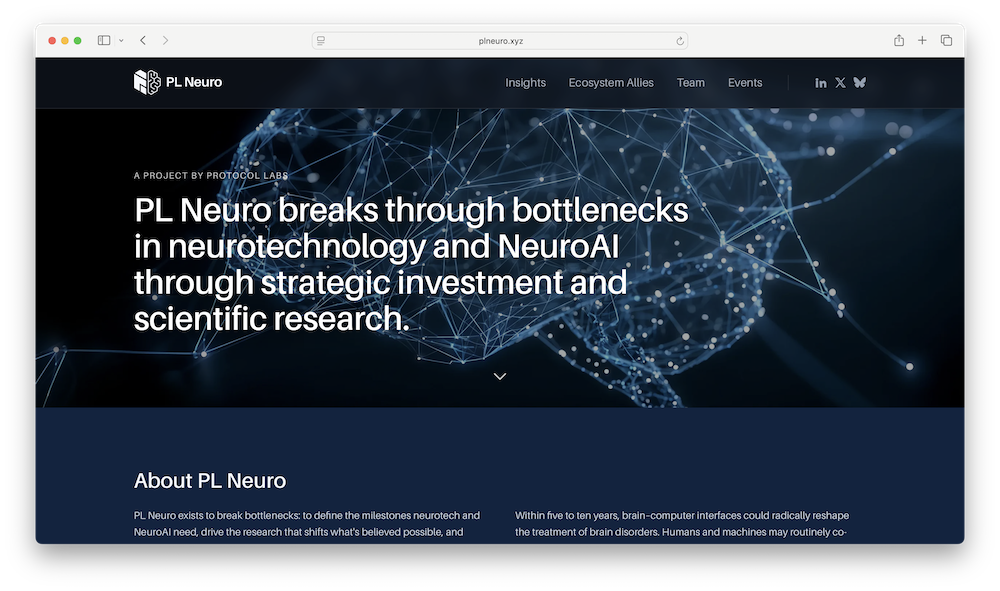
- PLNeuro.xyz is the online home of PL Neuro, a project by Protocol Labs (PL.xyz) focused on neurotechnology and NeuroAI.
- According to the website, PL Neuro aims to break through bottlenecks in the field by directing capital and research toward brain-computer interfaces, neural augmentation, and connectomics.
Overview
- What: According to PLNeuro.xyz, PL Neuro aims to define key milestones for neurotech and NeuroAI, drive research that shifts what the field considers possible, and route talent and capital toward problems including neural augmentation, biologically inspired intelligence, and whole organism emulation.
- Why: PL Neuro believes neuroscience and AI technologies will qualitatively change the human experience of life, with brain-computer interfaces potentially reshaping the treatment of brain disorders within five to ten years. According to the website, this future will not arrive by default, as progress in the field is currently held back by fragmented data, scarce talent, misaligned capital, and regulatory uncertainty, which is the gap PL Neuro says it aims to close.
- How: PL Neuro anticipates humans and machines routinely co-processing information through neural interfaces that expand cognitive abilities, alongside advances in human-like AI and, ultimately, the possibility of recapitulating individual minds in simulation.
PL Neuro Programming
- PLNeuro.xyz lists ongoing programming for the neurotechnology community, including a Connectomics Workshop, PL Neuro Salon, BCI Founders Retreat, and a roadmap series.
- PL Neuro’s podcast features conversations covering neurotechnology, brain-computer interfaces, neuroscience, and related developments in the field.
Protocol Labs Network
- PL.xyz: Protocol Labs, the parent innovation network behind PL Neuro. According to the website, Protocol Labs was founded in 2014 as the team behind IPFS, Filecoin, and libp2p, and now connects more than 750 startups, funds, and other organizations across web3, AI, and neurotechnology.
- PLCapital.xyz: PL Capital, described on the website as a family of venture funds backing founders scaling breakthrough research and development. PLC Neurotech (https://plcapital.xyz/neurotech), the fund arm behind PL Neuro, states on its website that it invests in brain-computer interface, NeuroAI, and connectomics companies, with a portfolio that includes Synchron, Paradromics, and Science Corp.
- Science.xyz: Science Corporation, founded by Max Hodak, is listed both as a PL Neuro ecosystem ally and as a portfolio company of PLC Neurotech, according to PL Neuro’s website. Max also serves as an advisor to PL Neuro directly, according to the team page. The company closed a $230M Series C round in March 2026 to fund commercialization of its PRIMA brain-computer interface retinal implant and expand its clinical trials.
PL Neuro Ecosystem Allies
- PLNeuro.xyz lists additional Ecosystem Allies in the neurotechnology field, including Synchron, Paradromics, Precision Neuroscience, Merge Labs, Convergent Research, and the Foresight Institute.
PL Neuro Leadership
- Juan Benet: Founder and CEO of PL Neuro, and Founder and CEO of Protocol Labs, according to PL Neuro’s website. Juan also serves as General Partner of PLC Neurotech, where he’s credited as the inventor of Filecoin, IPFS, and libp2p, and described as a frontier technology investor across crypto, neurotech, AI, and biotech, according to the website. PLC Neurotech also notes that Juan is a Stanford University and Y Combinator alum.
- Sean Escola, M.D., Ph.D.: Chief Neuroscientist at PL Neuro and Venture Partner at PLC Neurotech; a former professor at Columbia University and former CEO, Founder, and Chief Neuroscientist of biotechnology company Herophilus.
- Katie Biber: Chief Operating Officer and Chief Legal Officer at Paradigm.xyz, and a member of the Board of Directors of Protocol Labs, according to her website. She is also on the Board of Directors of RUM Group, a video-platform-and-AI-infrastructure holding company.
Connect with PL Neuro
Why .xyz is a great choice for PLNeuro.xyz
- The availability of .xyz gave organizations across the Protocol Labs network the ability to use similar naming conventions under the same domain extension, as seen with PLNeuro.xyz, PL.xyz and PLCapital.xyz.
- The generic, open-ended nature of .xyz suits an organization working across multiple emerging fields, from neural interfaces to whole-brain emulation.
- The .xyz domain is widely used by startups and organizations working across emerging technologies, placing PL Neuro among a broader community of innovators building in fields including AI, blockchain, quantum computing, and decentralized infrastructure.
More emerging tech from the #GenXYZ community
- Neurotechnology platform Science.xyz, by Neuralink co-founder Max Hodak, specializes in brain-computer interface technology
- Quantum computing startup QMatter.xyz aims to reduce complex problems for drug discovery and beyond
- Biotech innovator AscentBio.xyz seeks to advance drug discovery with AI-driven solutions
posted by Team XYZ on September 10, 2026
Prelude.xyz – Cloudflare customer – (United Kingdom)
TL;DR:
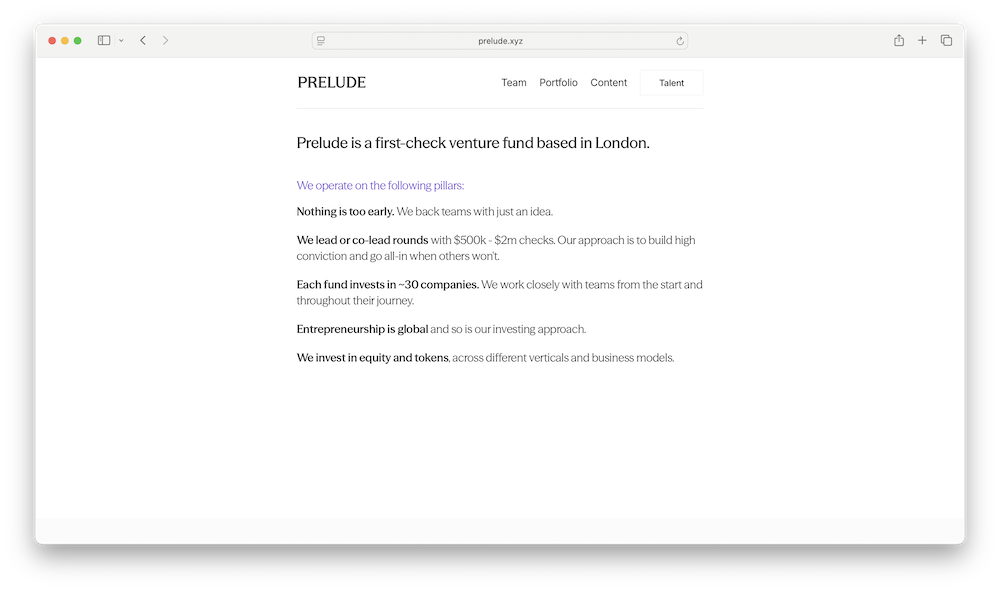
- Prelude.xyz is the online home of Prelude, a first-check venture fund that invests in early-stage crypto and blockchain founders.
- The firm rebranded from Cherry Crypto (Cherry.xyz) to Prelude in April 2025, adopting a name it says reflects its focus on investing before companies become obvious.
Prelude.xyz Overview
- What: Prelude.xyz is the online home of Prelude, a first-check venture fund that invests in early-stage crypto and blockchain founders. According to the website, Prelude backs teams as early as the idea stage, typically leading or co-leading rounds with checks between $500,000 and $2M.
- Why: Prelude describes its investment approach as getting involved before companies become obvious to the broader market, a philosophy reflected in its April 2025 rebrand from Cherry Crypto to Prelude.
- The firm’s announcement states it is optimistic about the “next phase” of crypto, pointing to established infrastructure, a shifting regulatory landscape, and products beginning to reach broader audiences.
- Where: According to the website, Prelude operates as a London-based team, while the firm’s Imprint lists Prelude Management GmbH as registered in Berlin, Germany.
- How: Prelude.xyz states that each fund invests in approximately 30 companies, with the firm working closely with teams from the initial check through later stages. Prelude invests in both equity and tokens across a range of verticals and business models and takes a global approach to sourcing founders.
Notable Prelude.xyz Portfolio Investments
- Anboto.xyz: Built for crypto hedge funds, OTC desks, and institutional traders, the platform offers algorithmic trade execution across more than 20 centralized and decentralized exchanges, according to its website.
- HairDAO.xyz: A network built on open-source principles, according to its website, where researchers and patients work together funding and studying potential hair loss treatments.
- Narval.xyz: A platform giving institutional custody providers a way to route wallet activity into onchain protocols, according to its documentation.
Prelude.xyz Leadership
- Patrick Mayr: PMayr.xyz, Co-founder and Partner
- Brett Sun: Co-founder and Partner; GitHub history shows prior contributions to Aragon, an Ethereum-based framework for building decentralized organizations
- Yannis Heyken: Co-founder and Operating Partner; listed as Managing Director of Prelude Management GmbH on the firm’s Imprint page
Connect with Prelude.xyz
Why .xyz is a great choice for Prelude.xyz
- .XYZ’s generic, open-ended nature suits a fund that, according to Prelude.xyz, invests across multiple verticals, business models, and asset types.
- Several of Prelude’s own portfolio companies also use .xyz domains, aligning the fund’s web presence with the broader founder community it backs.
- According to Prelude’s own announcement post, the fund operated as Cherry Crypto on Cherry.xyz before becoming an independent fund and rebranding to Prelude in 2025, carrying .xyz over into a new, short, easy-to-type domain under its new name.
More blockchain investment from the #GenXYZ community
- Blockchain-focused investor Mirana.xyz invests in blockchain and AI infrastructure projects.
- Technology investment firm Infinite.xyz supports decentralized networks and deep tech innovation, from Ethereum to Tesla.
- Early-stage venture firm GenVentures.xyz backs machine economy projects across AI, DePIN, and blockchain.
posted by Team XYZ on September 9, 2026
ButterflyEffect.xyz – Squarespace Domains customer – (United Kingdom)
Key Takeaways
- Founded by Elfried Samba (CEO) and Michael Heaven (Co-Founder/Managing Director), both with prior leadership roles at established agencies (Gymshark, Offbeat, SocialChain)
- Client roster includes McDonald’s, Netflix, Square, and Bumble
- Square’s content strategy with the agency continued for more than nine months after launch
- Backed by venture company Ioconic, which invested under $1M in the agency in exchange for services
About the Team
- Elfried Samba: CEO of Butterfly Effect; also founder of House of Samba; previously Chief Community Officer at Ioconic and Global Head of Social Content at Gymshark
- Michael Heaven: Co-Founder and Managing Director; previously General Manager and Media Director at Offbeat, managing communities reaching 200M+ users; founding partner at SocialChain, helping lead its US launch
Creative agencies use .xyz domains to develop their online hubs and showcase their portfolios. Global production company TwentyfourSeven.xyz supports creative campaigns for brands including Oakley Meta, Adidas, and Squarespace. Production studio FutureFrank.xyz creates media for Nike and Weight Watchers. Web3 marketing agency Distractive.xyz brings crypto-native strategy to blockchain brands. In this week’s #WebsiteWednesday, we’ll introduce you to a London-based influencer and community marketing agency working with brands across the United Kingdom and North America: ButterflyEffect.xyz.
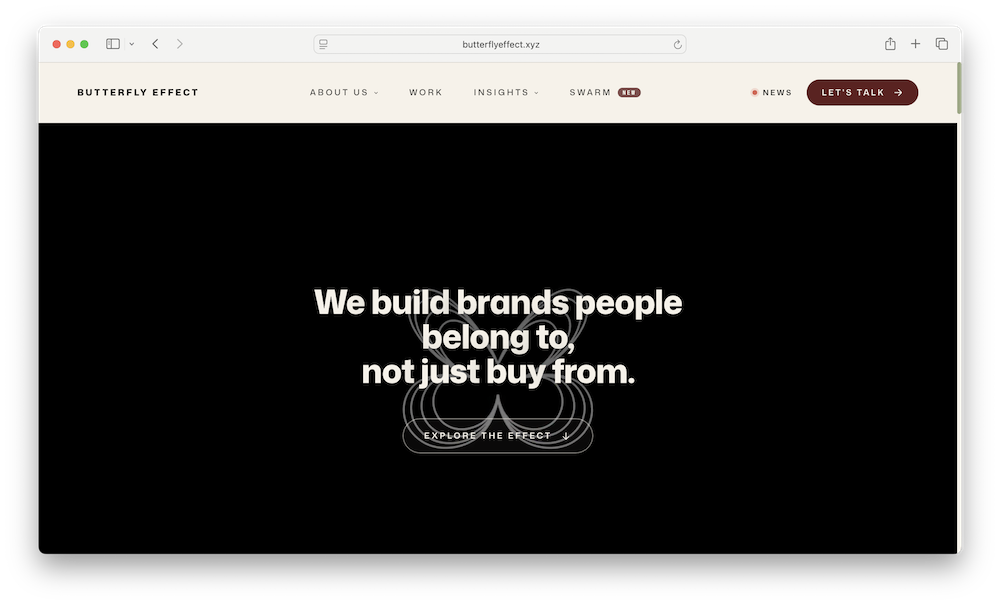
ButterflyEffect.xyz: A community-first marketing agency
ButterflyEffect.xyz is the online home of Butterfly Effect, an influencer and community marketing agency working with brands across the United Kingdom and North America. According to the website, the agency describes its mission as building “brands people belong to, not just buy from.”
Building brand communities through the CDMI framework
According to the Mission page, Butterfly Effect organizes its work around an operating framework it calls CDMI, short for Community Strategy, Distribution, Media, and Intelligence. The website describes the four areas as follows:
- Community Strategy: Brand and community relationship-building, described on the website as the foundation of how a brand earns trust and participation from its audience.
- Distribution: Reaching audiences on the platforms and in the moments where their attention already exists.
- Media: Content production, with the website describing an approach where every client operates like a media company to keep audiences engaged over time.
- Intelligence: Measurement across each stage of the brand-community relationship, tracking movement toward what the website calls belonging.
Exploring ButterflyEffect.xyz: From Square to Netflix and Bumble
Visitors to the Work page can find case studies organized by category, including Influencer, Creative, Social, and Strategy. Client work featured on the website includes McDonald’s, for whom the agency built a campaign called “The Crispy Chicken Sandwich,” and streaming service Netflix, for which the agency built a social campaign supporting the final season of the show “Top Boy.” The agency also worked with payments company Square, and developed an ongoing content strategy pairing the brand’s point-of-sale product with creators in the food and beverage, beauty, and retail spaces. According to the website, Square continued that strategy for more than nine months following its initial rollout.
One of the agency’s case studies, titled “You Don’t Know Me… Yet,” covers a campaign the agency built for dating app Bumble. According to marketing publication Prolific North, the agency built the campaign after research showed 53% of Black people in the United Kingdom felt absent from depictions of romance online. Bumble’s campaign aimed to close this gap, particularly for Black women. The resulting video features women speaking candidly about the dating stereotypes they’ve run into online.1
Butterfly Effect’s founders: Elfried Samba and Michael Heaven
Elfried Samba and Michael Heaven co-founded Butterfly Effect. Elfried serves as CEO, and also founded House of Samba, a platform for speaking and creator partnerships separate from Butterfly Effect.2 Before Butterfly Effect, Elfried served as Chief Community Officer at venture company Ioconic, which invested under $1M in Butterfly Effect in exchange for services, according to Prolific North.3 Earlier in his career, Elfried was Global Head of Social Content at fitness apparel brand Gymshark, following earlier roles there as Head of Digital Community, Digital Community Manager, Social Media Manager, and Social Media Executive, according to the Experience section of his LinkedIn profile.4
Michael Heaven serves as Co-Founder and Managing Director of Butterfly Effect. Before Butterfly Effect, Michael was General Manager, and previously Media Director, at social media company Offbeat Media Group, where his teams oversaw social media communities with a combined audience topping 200 million people, according to the Experience section of his LinkedIn profile. Earlier in his career, Michael was a founding partner at social-first creative agency Social Chain, where he helped lead the agency’s expansion into the U.S. market, according to the Experience section of his LinkedIn profile.5
The evolution to ButterflyEffect.xyz
Butterfly Effect upgraded its domain from butterfly3ffect.io to the friendlier ButterflyEffect.xyz. The move gives the company a domain that is easier to remember, share, and type. Butterfly Effect works across community strategy, content, and measurement for brands including McDonald’s and Square, with a stated focus on building brand communities that extend beyond a single campaign. .XYZ is an open, generic domain ending that works across industries, and it has become widely used by creators, agencies, and technology-focused businesses building an online presence. That makes it a bold choice for an agency working across community strategy, content, and creator partnerships for brands spanning multiple industries. We look forward to seeing how Butterfly Effect continues to grow its client roster and community-focused approach. You can learn more by following the agency on LinkedIn @butterflyeffectxyz and Instagram @butterflyeffect.xyz, and by visiting ButterflyEffect.xyz.
1. https://www.prolificnorth.co.uk/feature/why-the-time-is-right-for-2m-creative-agency-butterfly-3ffect-to-take-flight/
2. https://www.houseofsamba.io/
3. https://www.prolificnorth.co.uk/feature/why-the-time-is-right-for-2m-creative-agency-butterfly-3ffect-to-take-flight/
4. https://uk.linkedin.com/in/elfriedsamba
5. https://www.linkedin.com/in/mheaven/